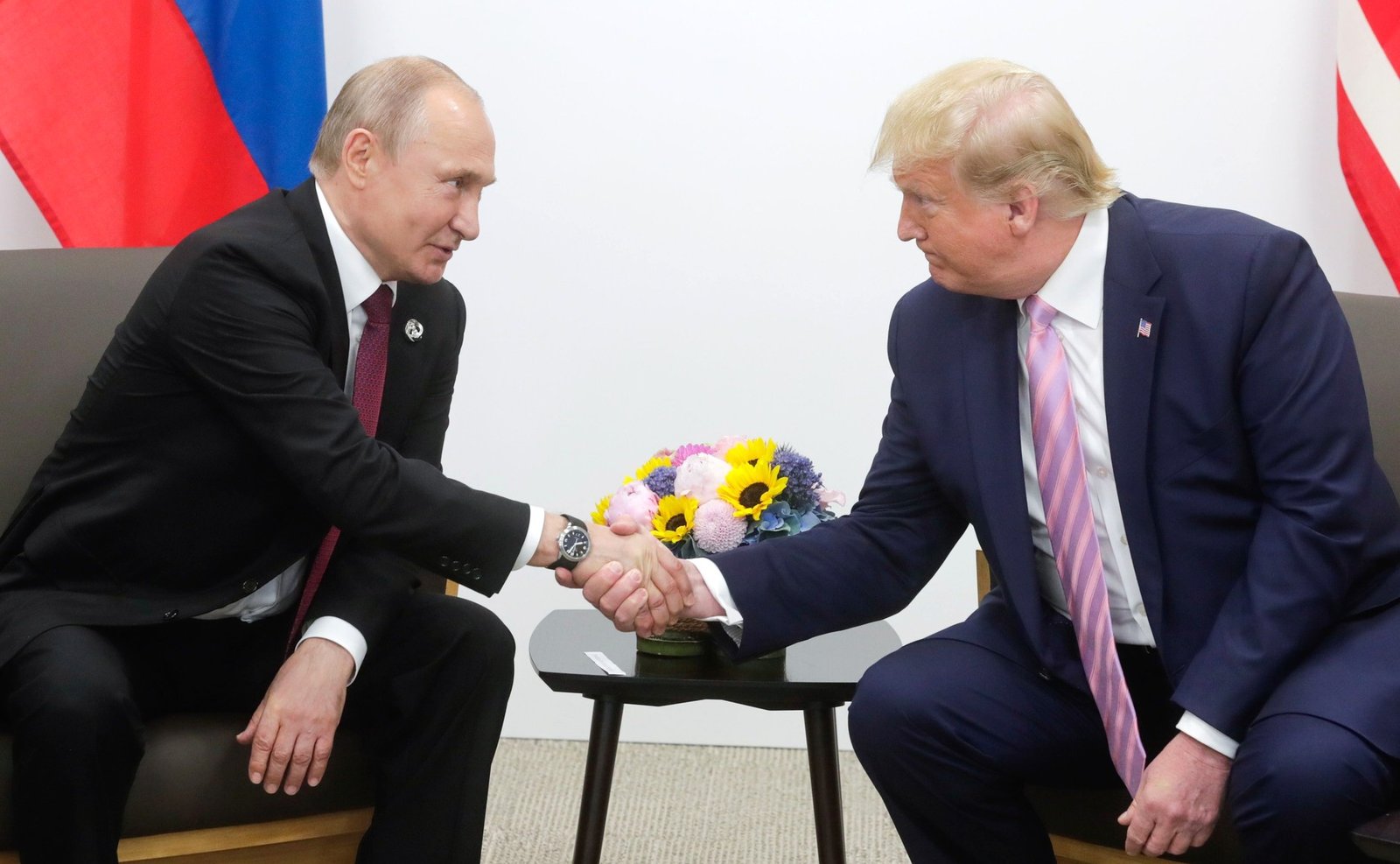
Trump Putin pull back Ukraine deal is the message President Donald Trump said he delivered to Vladimir Putin in person in China — and then repeated to the world on Thanksgiving Day. In a Truth Social post on Thursday, November 26, 2026, Trump said he had spent “a lot of time” telling Putin he would like him to “pull back all Military aggression against territories throughout Europe, in the hopes that a Deal can be made between Russia and Ukraine, and made quickly.” It was the clearest public account yet of what Trump said to Putin face to face, and it immediately raised two questions he did not answer.
What Trump said
Trump’s post was blunt. “Thousands of people are being killed each and every month, A COMPLETE BLOODBATH,” he wrote, describing the war in Ukraine. The message was that the killing should stop first, and a deal should follow quickly.
The post came on Thanksgiving Day, while Trump was at his Mar-a-Lago residence in Florida. It was part of a series of holiday posts in which he also discussed the war, NATO, and the upcoming G20 summit. But the Putin passage was the one that drew the most attention, because it described a private conversation in unusual detail — Trump saying he had pressed Putin directly, and at length, to pull back.
Trump did not say how Putin responded. He did not say what “pull back” would cover in practice — which territory, which forces, or what timeline. That gap is the first of the two open questions, and it matters, because the phrase could mean anything from a ceasefire to a full withdrawal, and Trump did not elaborate.
Where and when the conversation happened
According to Trump, the conversation took place in China, where he met Putin on the sidelines of the APEC summit in Shenzhen on November 19. The two leaders also held a trilateral meeting with Chinese President Xi Jinping. It was their most recent face-to-face meeting, and the first since Trump returned to the White House.
Trump also said he met NATO Secretary General Mark Rutte at Mar-a-Lago on Wednesday night, November 25, and updated him on the talks. The sequence — Putin in China, then Rutte in Florida, then the public post on Thanksgiving — suggests Trump is moving between the two sides of the negotiation in quick succession, briefing the alliance after talking to Moscow.
The setting matters because it shows how Trump is conducting this diplomacy: directly with Putin, then with NATO, then in public. The post was not a leak or a briefing. It was Trump himself telling the public what he told Putin.
The G20 question
The second open question is whether Putin will come to the United States. The G20 leaders’ summit is scheduled for December 14–15 at Trump National Doral in Miami, Florida, under the US presidency, and Trump has said Putin is welcome.
“If he wanted to come, he certainly can,” Trump told reporters at Mar-a-Lago on Thursday, adding that some people would not like to see Putin attend, and that he doubted Putin would ultimately choose to come. “If it were up to me, I’d like to have him,” he said. The Kremlin said on Thursday that no decision had been made on Putin’s participation.
Trump also said the biggest problem is that the two leaders — Putin and Ukrainian President Volodymyr Zelensky — “really hate each other.” That, he suggested, is what makes a deal hard even when the terms might be close.
Congress pushes back
Not everyone in Washington agrees with the invitation. A bipartisan group of House members, led by Democratic Representatives Pat Ryan of New York and Gil Cisneros of California and Republican Representative Don Bacon of Nebraska, sent a formal letter to the White House on November 19 urging Trump to immediately rescind Putin’s G20 invitation.
The lawmakers cited reports that Moscow provided Iran with satellite imagery and intelligence that may have assisted Iranian attacks on US forces, including a late-March attack on Prince Sultan Air Base in Saudi Arabia that wounded 12 American servicemembers and destroyed an AWACS surveillance aircraft. Ryan later called the invitation “a betrayal of our troops,” warning it would embolden Moscow in its war against Ukraine.
It was not the first such call. In September, a bipartisan group of 14 senators, including Jeanne Shaheen, Mitch McConnell, Roger Wicker, and Thom Tillis, sent a similar letter urging Trump to withdraw the invitation, warning that welcoming the Russian leader to American soil risked legitimizing his government while Russia continued attacking Ukrainian civilians.
Zelensky, for his part, has suggested the Miami summit could provide an opportunity for trilateral negotiations involving Ukraine, the United States, and Russia — acknowledging the congressional opposition but arguing that Ukraine’s participation could help secure broader support for such a meeting.
What “pull back” does not answer
The post leaves the most important details open. Trump said he wants Putin to pull back military aggression “against territories throughout Europe,” but he did not say whether that means a ceasefire along current lines, a withdrawal to earlier positions, or something else entirely. He did not say what Putin offered in return, or whether Putin agreed to anything at all.
Nor is it clear whether the G20 invitation helps or hurts the negotiation. Trump presents it as an opening — a chance to talk. His critics in Congress present it as a concession — a reward for aggression. The White House has not said whether the invitation will stand, and the Kremlin has not said whether Putin would accept it.
What is clear is that Trump has now put his position on the record in his own words: pull back, and a deal can be made quickly. Whether Putin agrees, and whether the two leaders can be brought to the same table in Miami in December, are the questions that will decide whether the Thanksgiving post was the start of a deal — or just a post.
FAQ
What did Trump ask Putin to do?
Trump said he told Putin in China to “pull back all Military aggression against territories throughout Europe, in the hopes that a Deal can be made between Russia and Ukraine, and made quickly.”
Will Putin attend the G20 in Florida?
It is not decided. Trump said Putin would be welcome — “If he wanted to come, he certainly can” — but said he doubted Putin would attend. The Kremlin said no decision had been made. The summit is December 14–15 at Trump National Doral in Miami.
When did Trump meet Putin in China?
The two leaders met on November 19 in Shenzhen, China, on the sidelines of the APEC summit, and also held a trilateral meeting with Chinese President Xi Jinping.
Why are lawmakers objecting to the G20 invitation?
A bipartisan group of House members wrote to Trump on November 19 urging him to rescind the invitation, citing reports that Russia provided Iran with intelligence that may have assisted attacks on US forces, and warning that welcoming Putin would undermine American troops and national security.
Sources: Palm Beach Post; Reuters; Kyiv Post; TBS News — November 26–28, 2026.
- Thanksgiving Day also set a spending record: Black Friday 2026 Online Sales to Hit $12.9 Billion
- The holiday’s other big story: Macy’s Thanksgiving Day Parade Postponed to Saturday
- More from Bravo News: Thanksgiving Day’s two last-second NFL finishes — Eagles Cowboys Thanksgiving Comeback 39-38 Stuns NFL and Bears Lions Thanksgiving 39-35 Caleb Williams Wins It